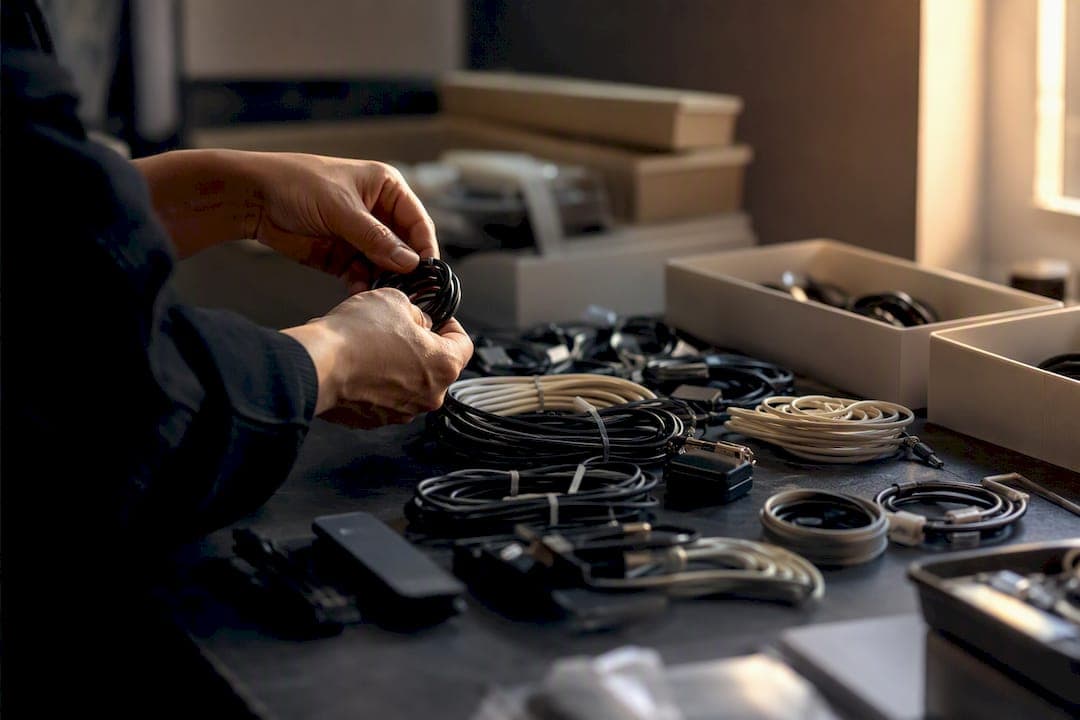
Start by sourcing from brand-authorized distributors and validating invoices that meet Amazon's electronics ungating requirements before you spend a dollar of capital. Electronics reselling for beginners on Amazon FBA lives or dies on three checkpoints: authorized supply, ASIN-level profit math, and a small test order that proves the whole chain works before you scale it.
Skip any one of these and you risk a suspended listing, a rejected ungating request, or a "profitable" SKU that loses money once fees hit.
- Buy only from brand-authorized distributors and collect invoices with itemized products, supplier contact details, and a date within 180 days
- Run full ROI math (unit cost, inbound freight, FBA fees, prep, returns) before ordering a single case
- Place a test order at minimum order quantity (MOQ), confirm the invoice and physical product match, then scale
Key Takeaways
Profitable electronics reselling for beginners depends on authorized supply, ungating-ready invoices, and ASIN-level profit math checked before inventory is purchased, not after.
| Point | Details |
|---|---|
| Source from authorized channels | Buy only from brand-authorized distributors, never retail receipts or liquidation lots. |
| Match every invoice field | Include supplier details, itemized products, a date within 180 days, and 10+ units per ASIN. |
| Calculate full landed cost | Add inbound freight, prep, FBA fees, and returns before trusting a margin figure. |
| Test before you scale | Place a minimum MOQ order and validate the invoice and product match before reordering. |
| Diversify supplier risk | Use two or three verified distributors per category to avoid a single point of failure. |
| Automate the sourcing loop | Resell Ready runs bulk ASIN checks, invoice tracking, and ROI math in one terminal instead of a spreadsheet. |
Table of Contents
- How Electronics Resale for Beginners Actually Starts With Sourcing
- What Invoice Fields Does Amazon Require for Electronics Ungating?
- How Do You Calculate ASIN-Level Profit Before You Buy?
- Building a Test-Order and Scaling Routine
- Basics of Electronics Reselling: Key Terms You Need to Know
- Choosing the Right Sales Channel for Your Electronics Inventory
- Reading Demand Signals Before You Commit to a SKU
- Storing and Handling Electronics Inventory Correctly
- Legal and Compliance Basics Every Electronics Reseller Needs
- Pricing Electronics Competitively Without Racing to the Bottom
- Why Professional Resellers Treat Sourcing as a Data Problem
- Where Resell Ready Fits Into Your Sourcing Workflow
- Sources
How Electronics Resale for Beginners Actually Starts With Sourcing
Most beginners waste their first month browsing generic B2B marketplaces instead of going straight to the source. The fastest path to legitimate wholesale electronics is the brand itself. Nearly every consumer electronics manufacturer, from headphone makers to smart home device companies, publishes an "authorized dealer" or "authorized distributor" list on its own website. That page is your starting map, not a supplier database.
Amazon's own seller guidance backs this up directly: source branded items from the brand or its authorized distributors, and validate any wholesaler through business licenses and brand authorization before committing to an order.
Here's the workflow that actually converts a cold list into ASIN candidates:
- Build a focused list of 20 to 30 brands in a category you understand, rather than chasing hundreds of shallow leads across every electronics niche.
- Visit each brand's authorized distributor or dealer page. If none exists publicly, email the brand's sales department directly and ask who handles wholesale for your region.
- Request a current price list from each verified distributor, along with their minimum order quantities and standard invoice format.
- Run every SKU on that price list through an ASIN or UPC matching tool, or a bulk upload process, to map wholesale items to live Amazon listings in one pass instead of checking products one by one.
- Filter for listing eligibility inside Seller Central's "Apply to sell" tool, since Amazon publishes category-specific requirements that flag whether a product needs approval before you buy inventory.
Trade shows and industry-specific trade directories round out this list, especially for smaller or regional brands that don't advertise dealer programs online. A five-minute conversation at a trade show booth often gets you further than a week of cold emails.
Category choice matters just as much as the sourcing channel. Accessories, cables, and mid-range audio equipment tend to carry far lighter gating restrictions than flagship phones or laptops, which makes them a smarter entry point while you're still building distributor relationships and a sourcing track record.
Pro Tip: Don't spread thin across 50 brands in your first month. Pick 20 to 30, get real responses from five or six authorized distributors, and go deep on those relationships before expanding.
What Invoice Fields Does Amazon Require for Electronics Ungating?
Amazon's ungating reviewers reject invoices for one reason more than any other: missing or mismatched information. Electronics ungating typically requires invoices from brand-authorized U.S. distributors showing at least 10 units per ASIN, dated within the last 180 days, and itemized down to the model or UPC level.
Your invoice checklist before you submit anything to Amazon:
- Supplier's full legal business name, physical address, and phone number
- An itemized product list showing model numbers, ASINs, or UPCs, not vague category descriptions
- Invoice date within 180 days of your ungating application
- Buyer name and address that matches your Seller Central account exactly
- A minimum of 10 units per ASIN on the invoice
- Unit prices and total quantities clearly stated, not bundled into a single lump sum
Invoice fields are only half the equation. The supplier behind that invoice needs its own verification pass before you wire any money:
- Confirm a real, physical warehouse address, not just a P.O. box or a residential address on file
- Check state business registration records to confirm the entity is legally operating
- Ask for a signed brand authorization letter naming your supplier specifically
- Request two or three buyer references you can actually call
- Confirm their liability and return policy in writing before your first order ships
Roughly one in three new wholesale sellers gets tripped up trying to ungate with the wrong document type, most often a retail receipt or a liquidation invoice that Amazon flags on sight. Amazon's own guidance explicitly warns that retail receipts and liquidation paperwork don't satisfy ungating requirements, no matter how legitimate the underlying purchase was.
Watch for these red flags before you send a deposit: prices sitting well below market rate for a "new" product, a seller who only communicates through a personal Gmail address, no verifiable business address anywhere online, and any hesitation when you ask for a brand authorization letter. Genuine authorized distributors expect these questions. Suppliers who dodge them are telling you something important without saying a word.
A supplier vetting checklist built around these exact fields turns this from a judgment call into a repeatable pass/fail test you can run on every new lead.
How Do You Calculate ASIN-Level Profit Before You Buy?
Wholesale product research has to account for landed cost, selling eligibility, and replenishment potential, not just the gap between wholesale and retail price, according to profitability research from Nations Distributor.
Here's the full cost stack you need before committing capital to any SKU:
- Wholesale unit cost from the distributor invoice
- Inbound shipping to the FBA warehouse, whether by freight or parcel
- Prep and labeling costs, including polybagging or bundling if required
- Amazon FBA fulfillment and referral fees for that specific ASIN
- A returns allowance, since electronics carry higher return rates than most categories
- Inspection or quality-check costs if you're using a third-party prep center
- Advertising spend needed to hold or win the buy box
- Sales tax obligations tied to your nexus and the marketplace
- Any reseller or brand program fees the distributor requires
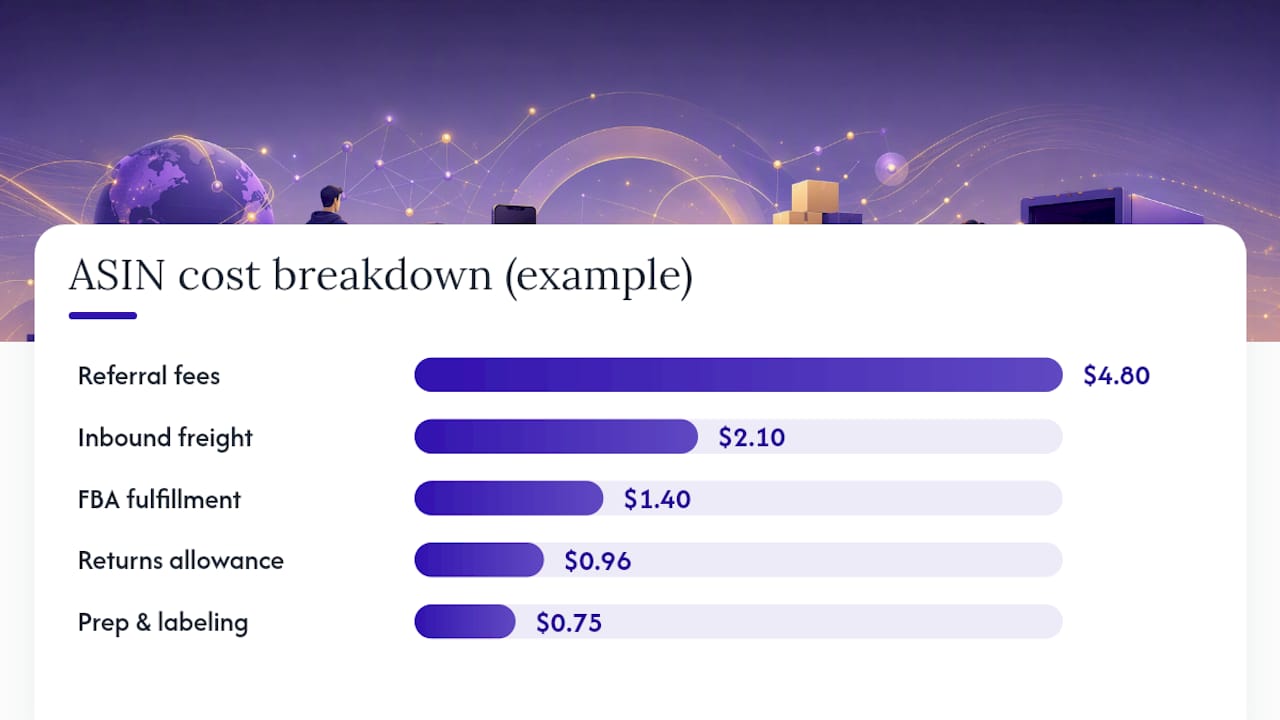
Run the numbers on a real example. Add $2.10 inbound freight, $1.40 in FBA fulfillment fees, $4.80 in referral fees, $0.75 in prep, and a 3% returns allowance of roughly $0.96.
That gap between the sticker margin and the real one is exactly where beginners lose money at scale, because they multiply the wrong number across a thousand units.
Beyond the cost math, filter every SKU on listing health before you buy: avoid hazmat or oversize classifications that spike FBA fees, check for stable Best Seller Rank rather than a spiky one, watch buy box share trends over the last 90 days, and note whether seller count on the listing is climbing fast, which signals a race to the bottom on price.
Pro Tip: Build a simple spreadsheet formula that subtracts all nine cost categories automatically. If you're doing this math manually for each ASIN, you'll skip a line item under deadline pressure, and that's how a "profitable" order turns into a loss.
Building a Test-Order and Scaling Routine
Professional resellers test before they commit, every single time, because a small order that validates authenticity, shipping speed, and invoice compliance costs far less than a large order that fails an ungating review. Start with the smallest MOQ your distributor will accept, provided it still clears Amazon's 10-unit-per-ASIN invoice threshold.
Use that opening order to check three things: the physical product matches what you expect against the UPC or model number, the packaging survives inbound shipping without damage, and the invoice you receive actually contains every field Amazon's ungating team requires.
Once a test order clears, size your next order against sales velocity and available working capital, not against the biggest discount tier the distributor offers. A bulk price break means nothing if the cash is tied up in inventory that takes four months to sell through.
- Confirm the test order invoice matches Seller Central buyer details exactly before reordering
- Track ASIN-level profit and loss from day one, not just total revenue
- Set watchlist alerts for price targets so you know exactly when a SKU's economics shift
- Diversify across two or three verified distributors per category so one supplier problem doesn't stall your entire pipeline
Pro Tip: Never let a single supplier account for more than half your inventory in any category. If they raise prices, run out of stock, or lose brand authorization, you need a second verified source ready to go.
Basics of Electronics Reselling: Key Terms You Need to Know
A handful of terms show up constantly once you start sourcing wholesale electronics, and knowing them cold saves you from misreading a supplier's price sheet or a listing report.
MOQ (minimum order quantity) is the smallest amount a distributor will sell per order, often set per SKU rather than per invoice. Ungating is Amazon's approval process for restricted categories like consumer electronics, requiring the invoice documentation covered earlier. BSR (Best Seller Rank) tracks how a product sells relative to others in its category, and a stable BSR usually beats a high but volatile one. Buy Box refers to the default "Add to Cart" listing on a shared ASIN page, and winning it consistently determines most of your sales volume when multiple sellers list the same product.
Landed cost means the total cost of getting a unit into an FBA warehouse ready to sell, not just the wholesale price. Gray market goods are genuine products sold outside the manufacturer's authorized distribution channels, often diverted from other regions, and they create serious ungating and authenticity risk even when the product itself is real. Replenishable describes a SKU you can reliably reorder at consistent cost and quality, versus a one-time closeout lot you can't repeat.
Understanding these terms isn't academic. A distributor who quotes you a price "per case" instead of "per unit MOQ" is speaking a different language than your spreadsheet, and that mismatch is where beginner math errors start.
Choosing the Right Sales Channel for Your Electronics Inventory
Amazon FBA remains the strongest channel for wholesale electronics resale at scale, mainly because Fulfillment by Amazon handles storage, shipping, and customer service once inventory lands in a warehouse. That infrastructure is what makes bulk wholesale sourcing viable in the first place. You're not packing and shipping units yourself.
eBay works differently. It suits smaller batches, discontinued models, or SKUs that Amazon has gated tightly enough that ungating isn't worth the effort. Sellers manage their own fulfillment and customer communication, which adds labor but removes Amazon's referral and FBA fee stack.
Local marketplaces and regional wholesale networks fit a narrower role: liquidating slow-moving stock, testing a new category before committing real capital, or building direct relationships with buyers who want volume pricing outside a marketplace's fee structure. They rarely scale the way Amazon FBA does, but they're useful pressure-release valves when an ASIN stalls.
For a reseller building a serious wholesale electronics operation, the sequencing usually works like this: validate a SKU's ASIN-level economics on Amazon first, since that's where the demand data and fee structure are most transparent. Use eBay or local channels opportunistically for excess inventory or categories Amazon gates too tightly to be worth pursuing. Running all three channels from day one spreads your attention too thin before you've proven any single SKU works.
Reading Demand Signals Before You Commit to a SKU
Wholesale product research has to go past "does this look like it sells." A robust process checks selling eligibility, current demand, competitive intensity, and whether the SKU can be reliably replenished at consistent cost and quality over multiple order cycles.
Start with historical sales-rank charts rather than a single snapshot. A product sitting at BSR 4,000 today means little if that rank has swung between 2,000 and 40,000 over the past six months. Tools like Keepa show that volatility clearly, and bulk-matching a distributor's price list against ASIN data upfront cuts hours of manual checking down to a first-pass filter you can run in minutes.
Seller count trends matter almost as much as sales rank. A listing with three sellers competing for the buy box behaves very differently than one with fifteen sellers racing each other on price. Check that trend over 60 to 90 days, not just the current count, since a sudden jump in seller count often signals a gray-market flood that will crush margins within weeks.
Seasonality catches a lot of beginners off guard in electronics specifically. Headphones, chargers, and smart home accessories spike hard around the holiday quarter, then flatten. A SKU that looks mediocre in March can be a strong reorder candidate by October, and the reverse is just as common: don't judge a product's full-year potential from a single month of rank data.
Storing and Handling Electronics Inventory Correctly
Electronics inventory carries handling risks that generic dry goods don't. Static discharge can damage circuit boards, temperature swings degrade batteries, and crushed retail packaging turns an otherwise sellable unit into a return or a damaged-goods write-off.
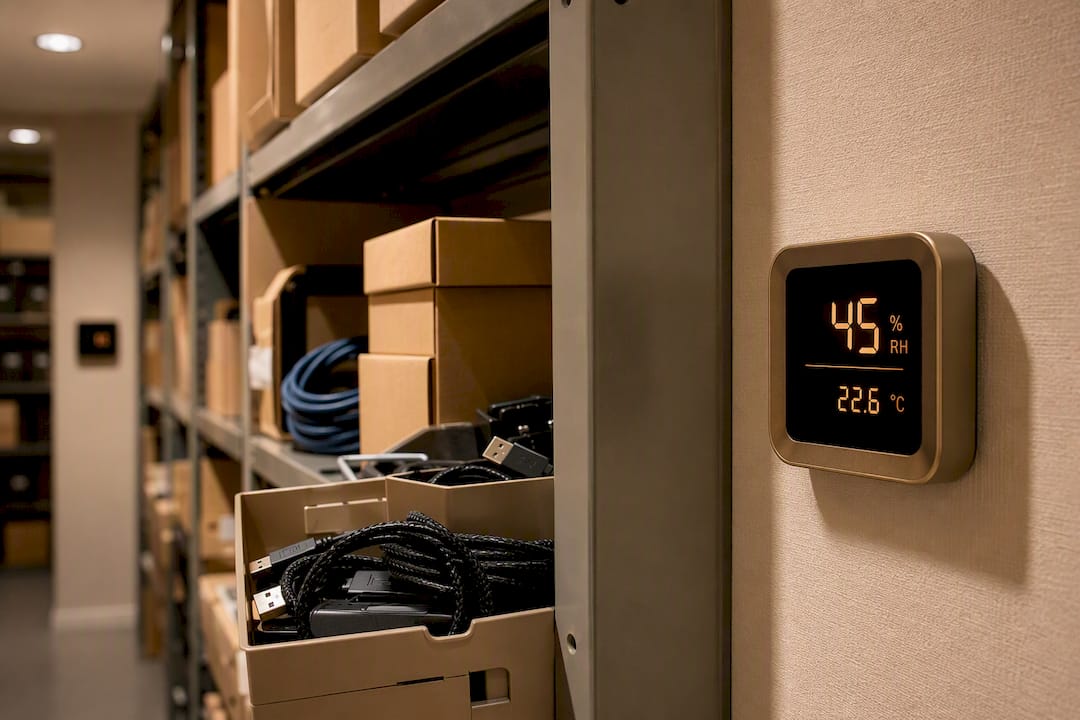
Keep staging areas dry and temperature-controlled, ideally between 50 and 80 degrees Fahrenheit, especially for anything with a lithium battery. Extreme heat during transit or storage measurably shortens battery lifespan and, in rare cases, creates a genuine safety hazard.
Original retail packaging matters more for electronics than almost any other resale category, since damaged boxes trigger a disproportionate share of buyer complaints and returns. If you're using a third-party prep center before sending inventory to FBA, confirm they inspect for physical damage and verify model numbers against your invoice before repackaging or labeling anything.
Batch your inbound shipments by ASIN and keep a paper trail matching each unit back to its source invoice. If Amazon ever requests documentation for a specific unit sold, and electronics categories get these requests more often than most, you need to produce that invoice within days, not weeks of searching through old email threads.
Legal and Compliance Basics Every Electronics Reseller Needs
Reselling genuine, authorized electronics is legal. The risk lives in how you source, not in the act of resale itself. Selling gray-market goods, counterfeit accessories, or products diverted from authorized distribution channels can trigger intellectual property complaints, account suspension, and in serious cases, legal liability tied to safety or trademark violations.
Keep every distributor invoice, brand authorization letter, and business registration document on file indefinitely, not just until your ungating application clears. Amazon can request supplier documentation at any point after approval, and a seller who can't produce it on demand risks the same suspension as one who never had legitimate supply in the first place.
Sales tax compliance varies by state and by where you hold inventory, since FBA warehouses can create nexus obligations you didn't have as a smaller seller. Consult a tax professional familiar with multi-state e-commerce once your inventory footprint spans more than one or two states.
Product safety certifications, like FCC compliance for anything with wireless transmission, or UL listing for anything with a power supply, should already be handled by the original manufacturer. Your job is confirming the distributor is authorized to sell that certified product, not recreating certification testing yourself.
Pricing Electronics Competitively Without Racing to the Bottom
The lowest price on a listing rarely wins the most profit, even when it wins the buy box. Price against your full landed cost stack from the profitability section above, not against a competitor's sticker price, or you'll match a seller who's clearing out old stock at a loss.
Watch buy box price history over several weeks before setting your own. A listing that swings between $28 and $34 tells you sellers are testing price elasticity, and jumping straight to the bottom of that range sacrifices margin you didn't need to give up. Price near the middle of that range initially, then adjust based on how fast you're actually converting.
Bundle pricing works well for accessories specifically, since a charging cable bundled with a case often clears faster than either item alone, and the bundle isn't directly comparable to single-unit competitors on price. Repricing software helps at scale, but set floor prices manually based on your real cost math, never on an automated "match the lowest seller" rule that can push you into a loss without you noticing for weeks.
Why Professional Resellers Treat Sourcing as a Data Problem
Electronics resale rewards people who treat sourcing like a numbers discipline, not a hobby. Every profitable wholesale operation runs on the same backbone: verified suppliers, invoices that hold up under scrutiny, and profit math checked before capital moves, not after.
Automation changes how fast you can run that loop, not whether you need it. Instant ASIN checks, bulk invoice mapping against distributor price lists, and automated profit and loss tracking turn a process that used to take a week of manual spreadsheet work into an afternoon. That speed is what separates resellers running five SKUs from ones running five hundred.
— Christian
Where Resell Ready Fits Into Your Sourcing Workflow
Everything in this guide, from matching a distributor's price list to real ASINs, to checking invoice compliance, to running the profit math before you buy, is exactly what Resell Ready was built to speed up. Instead of manually cross-referencing a spreadsheet against Amazon listings one SKU at a time, you paste ASINs directly into the terminal and get instant buy or skip verdicts backed by real profit math.
The platform's verified supplier database gives you a starting point for authorized distributors instead of cold-emailing brands blind, while the automated inventory dashboard tracks ASIN-level ROI and net profit the same way this article just walked through it, minus the manual spreadsheet work. Watchlist alerts flag price target changes so you're not checking listings by hand every morning.
A practical first move: paste a sample price list or ten ASINs from a distributor you're already vetting, confirm the invoice and ROI numbers line up with what this guide covers, then run your test order with confidence backed by real numbers instead of a gut estimate. Start a trial and put your next sourcing decision through the same checklist this article just laid out.
Sources
- How to find wholesalers — Amazon seller guidance
- Amazon FBA wholesale product research guide — Nations Distributor