
Wholesale supplier directories are specialized databases that provide verified lists of suppliers for entrepreneurs and retailers to source bulk products confidently and efficiently. Unlike a simple Google search, these platforms pre-screen suppliers for legitimacy, organize listings by niche and region, and give resellers direct access to manufacturers, distributors, and dropshippers. The best wholesale supplier directories range from free access platforms with thousands of listings to paid membership models offering millions of products, each with different levels of vetting rigor. Knowing how to choose and use the right directory cuts sourcing time, reduces scam exposure, and puts better margins within reach.
What makes the best wholesale supplier directories worth using?
The defining feature of a quality supplier directory is verified supplier data, not just a long list of names. Reputable directories offer either free access or paid membership with rigorous supplier verification. That distinction matters because an unverified list is just a starting point, while a vetted directory is a shortcut to trusted relationships.
Strong directories share several core features:
- Supplier verification: Physical headquarters checks, business registration confirmation, and certification reviews separate real wholesalers from retailers posing as them.
- Advanced filtering: Filter by product category, location, minimum order quantity (MOQ), shipping region, and dropshipping capability to narrow results fast.
- Complete supplier profiles: Transparent pricing tiers, lead times, payment terms, and contact details should all appear on each listing.
- Ecommerce integrations: Directories that connect with Shopify, Amazon, and WooCommerce reduce manual data entry and keep inventory synced automatically.
- RFQ support: Platforms that let you submit a Request for Quote directly to suppliers compress sourcing timelines significantly.
Pro Tip: Filter by MOQ before you contact any supplier. Reaching out to a supplier whose minimum order is 500 units when you need 50 wastes both parties' time and signals inexperience.
Free directories offer broad access but typically require more due diligence on your end. Paid directories justify their cost by doing that vetting work for you. The right choice depends on how much time you can spend verifying suppliers yourself versus how much you value a pre-screened shortlist.
How do directories verify wholesale suppliers to ensure legitimacy?
Supplier vetting is the single biggest differentiator between a useful directory and a liability. Fake wholesale directories often list retailers, not true wholesalers. Physical inspections and business registration checks are what separate legitimate supplier listings from fraudulent ones.
The most thorough directories follow a multi-step audit process:
- Business registration confirmation: The directory checks that the supplier is a legally registered business in its home country or state.
- Physical headquarters verification: A confirmed physical address, not just a P.O. box, validates that the operation is real.
- Manufacturing or distribution legitimacy: The audit distinguishes actual manufacturers and authorized distributors from middlemen who inflate prices.
- Certification checks: Depending on the product category, directories look for ISO, CE, GMP, or other relevant certifications.
- Ongoing monitoring: Reputable platforms remove suppliers who fall below standards after initial listing, not just at the point of entry.
SaleHoo's 55-point audit is one of the most cited examples of this kind of structured vetting. That level of scrutiny goes well beyond a supplier's self-reported profile.
Legitimate directories charge for vetted supplier connections and factory-authorized relationships, not just access to a product list. Worldwide Brands makes this distinction explicit: paying members get access to suppliers who have been confirmed as genuine wholesale sources, not aggregated web results.
This model protects resellers from one of the most common sourcing mistakes: paying wholesale prices to a middleman who is actually buying from the real wholesaler and marking up the cost.
What types of wholesale supplier directories exist?
The supplier directory market splits into four broad categories, each suited to a different sourcing strategy.
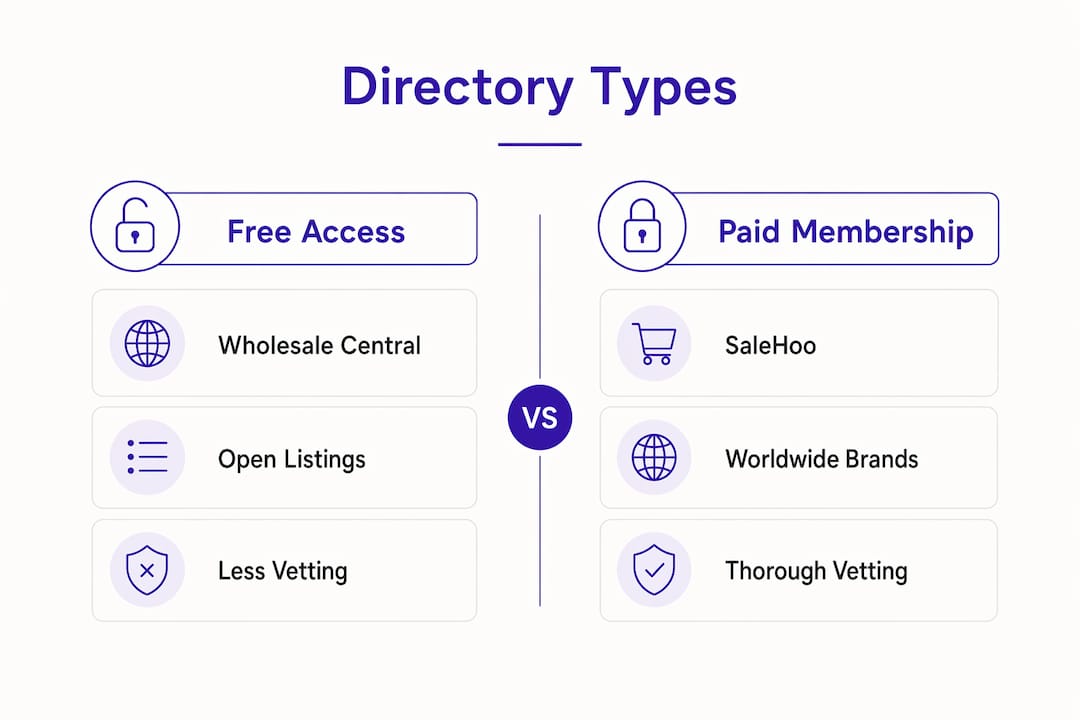
Free access directories like Wholesale Central provide open listings without a membership fee. The tradeoff is less rigorous vetting. These work well for experienced resellers who know how to evaluate a supplier independently and want a wide net to cast.

Paid membership directories like SaleHoo and Worldwide Brands charge annual or monthly fees in exchange for deeply vetted supplier lists. SaleHoo lists over 8,000 suppliers, while Worldwide Brands provides access to over 16 million products. The cost is justified when the vetting saves you from one bad supplier relationship.
Regional directories focus on specific markets. Clever Wholesale lists 1,500+ verified US companies across 50+ categories, making it a strong starting point for retailers who want domestic suppliers with shorter shipping times and simpler logistics. TopTenWholesale serves a similar US-focused audience.
Global B2B marketplaces operate at a much larger scale. Fairmarkit connects buyers to over 2.7 million suppliers worldwide. That scale brings enormous product variety but also requires more filtering work to find the right fit.
Pro Tip: Match the directory type to your business stage. New resellers benefit most from paid, vetted directories because the reduced risk outweighs the membership cost. Established sellers with sourcing experience can extract more value from free or global platforms where they can apply their own judgment.
The shift from static directories to active marketplaces with verified suppliers is accelerating. Platforms that combine supplier databases with RFQ tools, pricing data, and ecommerce integrations are replacing simple bulk supplier listings as the preferred sourcing infrastructure for serious resellers.
How to effectively find quality suppliers using online wholesale directories
Finding a good supplier through a directory is a skill, not just a search. The process works best when you approach it with a clear framework rather than browsing randomly.
Start by defining your niche and product category before you open any directory. Knowing exactly what you need, including target price range, acceptable MOQ, and required shipping speed, lets you filter aggressively from the first search.
- Use location filters first. Domestic suppliers offer faster shipping and simpler returns. International suppliers, particularly from manufacturing hubs, often offer lower unit costs but longer lead times.
- Check supplier profiles for transparency. A quality supplier lists MOQ, pricing tiers, lead times, and payment terms clearly. Vague profiles are a warning sign.
- Submit structured RFQs. Structured RFQ outputs including MOQ, pricing tiers, and lead times shorten sourcing cycles compared to unstructured contact. Platforms like Towobo support direct RFQ submission with standardized fields.
- Cross-reference supplier credentials. Even within a vetted directory, check the supplier's website, business registration, and any available reviews independently.
- Avoid directories that list retailers as wholesalers. If a supplier's prices are only marginally below retail, they are not a true wholesaler. Compare their prices against retail listings before committing.
Pro Tip: Contact at least three suppliers for any product category before making a decision. Compare not just price but response time, communication quality, and willingness to provide samples. A supplier who responds slowly to a first inquiry will not get faster after you place an order.
Trade shows and direct manufacturer outreach remain important complements to directory research, especially for private label sourcing. Directories give you a starting list. Trade shows give you relationships. Both are necessary for a complete sourcing strategy.
Directories that integrate with ecommerce platforms like Shopify and Amazon reduce the manual work of updating inventory and processing orders. Inventory Source, for example, connects directly to both platforms, which means supplier catalog changes can flow through to your store automatically.
Key Takeaways
The most effective sourcing strategy combines vetted wholesale supplier directories with direct supplier relationships and ecommerce platform integrations to reduce risk and speed up inventory decisions.
| Point | Details |
|---|---|
| Vetting is the core value | Paid directories like SaleHoo use multi-point audits to confirm supplier legitimacy before you make contact. |
| Match directory type to your stage | New resellers benefit from paid, vetted directories; experienced sellers can extract more from free or global platforms. |
| Filter before you contact | Use MOQ, location, and category filters to eliminate poor fits before spending time on outreach. |
| RFQs shorten sourcing cycles | Structured proposals with pricing tiers and lead times move deals faster than unstructured email inquiries. |
| No single directory is enough | Combine directory research with trade shows and direct outreach for the most complete supplier picture. |
Why I think most resellers underuse their directories
Most resellers treat a directory like a phone book. They search, find a name, send an email, and wait. That approach misses most of the value these platforms offer.
The real power of a vetted directory is the pre-qualification work it has already done. When SaleHoo's 55-point audit has already confirmed a supplier's physical address, business registration, and product legitimacy, you are not starting from zero. You are starting from a position of informed trust. That is a significant advantage that most resellers do not fully use because they skip reading the verification details on each profile.
The second mistake I see constantly is treating directories as a substitute for relationships. A directory gets you to the door. What happens after you knock is entirely up to you. Suppliers give better pricing, faster lead times, and priority during stock shortages to buyers they know and trust. Building that trust requires consistent communication, reliable orders, and treating suppliers as partners rather than vendors.
My honest recommendation: use at least two directories with different strengths, one paid and vetted for your core product categories, and one broader platform for market research and price benchmarking. No single directory covers every supplier, and cross-referencing two sources catches gaps that one platform alone will miss. Pair that with one trade show per year in your niche, and your sourcing network will compound in value over time.
— Christian
How Resell-ready helps resellers source smarter
Wholesale directories tell you who sells a product. Resell-ready tells you whether buying it is actually worth it.
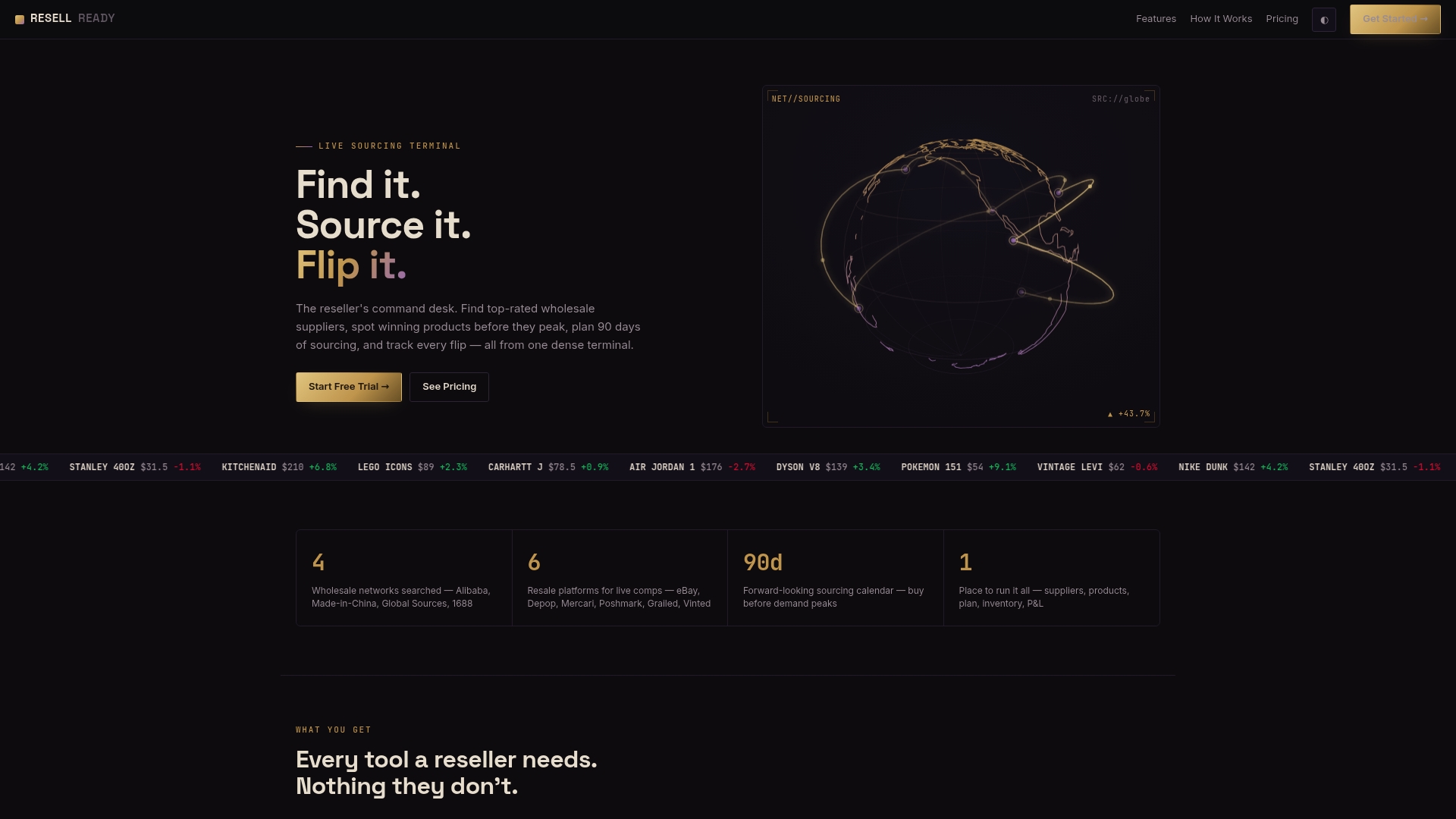
Resell-ready is the sourcing command center built for Amazon FBA and eBay resellers. Paste an ASIN and get instant ROI, net profit estimates, and real-time price data before you commit to any supplier order. The platform's verified supplier database pairs directly with the price research tools, so you can move from directory discovery to profitability check in one workflow. No spreadsheets, no guesswork on margins. Resell-ready gives you the data to decide fast and source with confidence.
FAQ
What is a wholesale supplier directory?
A wholesale supplier directory is a curated, searchable database of verified wholesalers, manufacturers, and distributors. Resellers use these platforms to find legitimate bulk product sources without manually vetting each supplier from scratch.
Are free wholesale directories worth using?
Free directories provide broad access but typically apply less rigorous vetting than paid platforms. They work best for experienced resellers who can independently evaluate supplier legitimacy and pricing.
How many suppliers do the best wholesale supplier directories list?
Scale varies widely. Inventory Source lists over 4,000 suppliers, SaleHoo lists over 8,000, and Worldwide Brands provides access to over 16 million products across its supplier network.
How do I avoid fake wholesale suppliers in a directory?
Check that the supplier has a confirmed physical address, transparent MOQ and pricing, and verifiable business registration. Paid directories with multi-point audits, like SaleHoo's 55-point verification process, filter out most fraudulent listings before you see them.
Do wholesale directories integrate with Amazon and Shopify?
Several do. Inventory Source connects directly with both Amazon and Shopify, allowing automatic catalog syncing and order management without manual data entry between platforms.